Korça is already one of Albania's most charming cities, and in December it gets even better. The Old Bazaar glows with lights, the cafés and taverns fill up, and for many Albanians it's the favourite place to spend the holidays. If you're looking for a winter break that feels festive and genuinely local, this is a very good choice.
When the lights go on
The festive season officially starts in early December. In recent years the city has switched on its Christmas lights on the evening of December 6, with a festive concert, and the city has put together a full programme of activities running through to New Year's Eve. The centre, the pedestrian boulevard and the Old Bazaar are where it all comes together, so a simple evening walk is already part of the experience.
Programmes change every year, so check local announcements closer to the date for what's planned.
The Christmas market and festive events
Korça has a Christmas market each December, with local food such as lakror, warm drinks, handmade goods and concerts through the month. In some years there has also been an ice rink in the centre. The city is described as one of the country's leading winter destinations, and the holiday period is one of its busiest, so the streets have a real buzz.
The Old Bazaar in winter
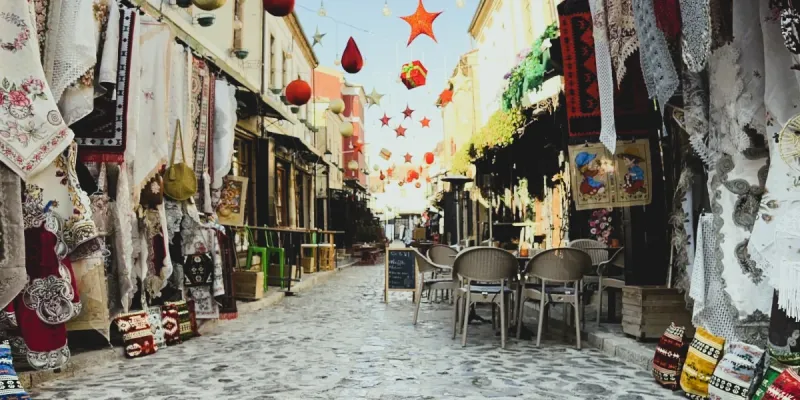
The Old Bazaar is lovely in summer, but in winter it becomes cosier: cobblestone lanes, warm light from the cafés, and traditional taverns where many keep a fireplace burning and offer live music in the evenings. It's a good place to spend an afternoon moving from one warm spot to the next.
New Year's Eve in Korça
New Year's Eve is a big night across Albania, and Korça is one of the favourite places to spend it. Many hotels, restaurants and venues organise special dinners and parties with live music, good food and a relaxed, festive atmosphere. It's popular enough that accommodation often books out, so reserve your hotel and your New Year's Eve table well ahead.
What to eat
Winter is the right season for Korça's food. The star is lakror në saç, a savoury pie traditionally baked under an iron dome covered with hot embers, usually filled with leeks and cheese, and best eaten hot. Add a glass of Birra Korça, Albania's first beer, and a table by a fireplace, and you have the classic Korça winter evening. For more on the local dishes, see our guide to Albanian comfort foods.
Day trips to Dardha and Voskopojë
Two villages near Korça are popular in winter, and Korça makes a convenient base for both.
- Dardha is known for its winter sports and has a ski resort, and it's a favourite with Albanians in winter.
- Voskopojë is a mountain village with old churches and a cosy winter atmosphere, and its taverns and hotels often offer live folk music during the holidays.
The villages around Korça, including Boboshtica, Dardha and Voskopojë, are also known for hearty local food, so a long lunch is part of the trip. Snow varies from year to year, so check conditions before you plan around skiing or a snowy walk.
Getting there and where to stay
Korça is about 3 hours from Tirana by road. It's possible as a day trip, but it's much better with at least one night, so you can enjoy the evening atmosphere. Because it's so popular over the holidays, hotels fill up early, particularly around December 23 to January 3, so book as soon as you know your dates. Korça is inland and colder than the coast, so bring warm layers.
A simple 2-day plan
- Day 1: Arrive, walk the pedestrian boulevard and the Old Bazaar, visit the cathedral, and have dinner at a traditional tavern with live music.
- Day 2: Museums in the morning (the Gjon Mili Museum of Photography and the Museum of Medieval Art are good options), lunch with lakror, then a trip to Dardha or Voskopojë if the weather allows.
See Korça with us
If you'd like a local to show you the highlights, our Korça Cultural Walking Tour takes you through the Old Bazaar, the main sights and the museums, and our Korça Culture & Cooking Experience adds a hands-on cooking session. For a wider look at the city, see our guide to Korça, the Little Paris of the Balkans.